You get up off the massage bed and for a moment you feel a few kilos lighter. The shoulders you’ve been carrying up around your ears for six months are suddenly down. Your neck turns to where it hasn’t wanted to go for weeks. And there’s an odd quiet in your head, like someone turned down a radio left on. What exactly just happened in that hour?
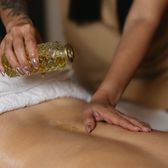
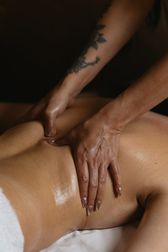
Thai massage doesn’t work like a soothing oil massage, where gentle kneading does most of the work. It’s active work with the whole body. Pressure from palms, thumbs and forearms goes into precise points. And above all it stretches you into positions your body won’t reach on its own. That’s why its effects are a little different. It isn’t just “that felt nice”, but a tangible change in how you move, breathe and sleep. Let’s go through exactly what your body and mind gain, and how to get the most from it.
Quick answer
Thai massage releases stiff muscles, returns range to the joints through assisted stretching and gets the circulation going. At the same time it switches the nervous system into calm, and so eases stress.
The result is usually better sleep and a sense of lightness and energy. We cover the general effects of massage in a separate article. Here we stick to what’s specific to Thai massage.
In this article
What makes Thai massage different
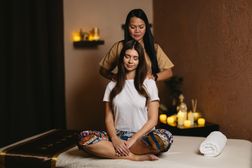
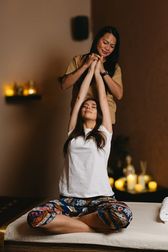
Before the effects, one difference that explains all the rest. Thai massage is done clothed and without oil, traditionally on a mat on the floor (with us on a wide massage bed). The therapist doesn’t stop at the palms. She uses thumbs, forearms, elbows, knees and her own body weight. And above all she stretches you into positions you’d never get into lying down alone. That’s why it’s sometimes called “lazy person’s yoga”. Some of the work you’d otherwise have to do yourself, the therapist does for you.
- Targeted pressure, not surface stroking. The work follows the energy lines (sen) and muscle attachments. Exactly where the tension really holds, not just across the surface.
- Assisted stretching. Slow, guided positions open the hips, shoulders and spine to a range you can’t reach on your own. That’s where the “new body” feeling comes from.
- A rhythm that lulls you. Alternating pressure and stretch at a calm pace feels meditative rather than mechanical. The body switches itself into standby.
We describe exactly how a session goes, step by step, in How a Thai massage works; what Thai massage actually is and where it comes from is in What is Thai massage.
Released muscles, and joints that move again
The first thing you’ll feel is what happened to the muscles. Sustained pressure can “talk” an overworked muscle into letting go. And once it does, the joint that’s been straining all day gets relief too.
- Dissolving stiffness and muscle knots. Patient pressure into a tight spot gradually lowers its tone. Most of all in the back, neck and shoulders, where desk stress settles.
- Greater range of motion. Stretching returns elasticity to shortened muscles and joints. After a massage you’ll often turn further behind the wheel than you have in weeks.
- Releasing the whole chain, not one point. Thai massage treats the body as a whole. When stiff hips let go, the back often eases too, because it stops compensating for what the hips wouldn’t do.
- Balancing one-sided strain. Sitting, a phone to one ear, a bag on the same shoulder. Massage helps straighten out what the day twisted to one side.

Better circulation and deep calm
The second layer of effects is under the skin and in the nerves. Pressure and movement get the blood flowing where long sitting had nearly stalled it, and the slow pace switches the body out of “on guard” mode into rest mode.
- Better circulation. Kneaded and stretched muscles get more oxygen-rich blood; that’s why you often feel a pleasant warmth in your limbs afterwards.
- Switching into calm. The calm rhythm activates the parasympathetic system, the part of the nervous system that governs slowing down, digestion and recovery. Your pulse settles and your breath deepens on its own.
- Noticeably less tension. Once the body stands down, a clenched jaw and hunched shoulders you hadn’t even noticed let go too.
This is the main reason so many people leave feeling like a different person. It has nothing to do with any “flushing out of toxins”, as you sometimes read. It’s simply a nervous system finally allowed to switch into calm, and muscles that stopped bracing.
Better sleep, lightness and energy
The effects don’t end at the salon door. The nicest part often comes that evening and the next morning.
- Calmer sleep. A relaxed body and a quieted mind fall asleep more easily; many clients describe the best sleep they’ve had in a long time after a massage.
- A sense of lightness. Once you shed the tension you’d stored up, movement comes on its own, without that familiar “drag” in the back and neck.
- Fresh energy. It isn’t a caffeine-style buzz, more a cleared head and appetite for things. And if a pleasant tiredness comes instead, that’s fine too. The body has switched to recovery.
What it helps with, and when to see a doctor
Thanks to its all-round action, Thai massage proves its worth with the everyday complaints of modern life. One simple rule applies, though. Massage is deep care and relief, not treatment. For anything medical, your doctor has the last word.
- An aching back from sitting. Releasing overworked muscles often brings noticeable relief. More in Massage for back pain.
- A stiff neck and tension headaches. Loosening the neck and shoulders tends to show quickly. See Massage for headaches.
- Overworked, stiff muscles after sport. Stretching returns mobility to muscles under strain.
- Long-term stress and burnout. Regular calm does wonders for mood and sleep alike.
With these, check with your doctor before a massage:
- a fever,
- a fresh injury or inflammation,
- advanced pregnancy,
- more serious conditions.
You’ll find an overview in our article on massage contraindications. A sensible therapist will point you to a specialist at such a moment, and that’s exactly right.
How to make the effects last
A one-off massage brings relief right away, but real change comes with regularity. The body only holds on to what you repeat.
- Go regularly. You’ll set the right rhythm to suit you. Our article How often to have a Thai massage helps you gauge it.
- Drink water and take it easy. A little water and an unhurried moment after your massage extend the feeling of release by good days.
- Talk to your therapist. Say where it holds and what pressure suits you. The massage will then land exactly where you need it.
Weighing up different techniques? Our Thai vs classic massage comparison will help you pick the right one for your goal.
Key takeaways
- Active work with the whole body: pressure and assisted stretching, clothed and without oil.
- Releases muscles and restores range of motion, most of all in the back, neck and shoulders.
- Gets circulation going and calms the nervous system, easing stress.
- Better sleep, lightness and energy often come that evening and the next day.
- The effect lasts with regularity and gentle stretching between massages.
- With a fever, injury, pregnancy or illness, see your doctor first.
Feel the effects of Thai massage for yourself
Traditional Thai massage by certified therapists from Southeast Asia: pressure, stretching and calm in one.
Free cancellation up to 24 h aheadpay at the salon
About the Traditional Thai Massage