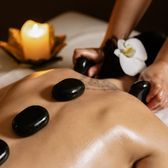
You arrive chilled from a November street, shoulders up by your ears, back like a plank. Minutes later smooth stones are resting on it, radiating gentle warmth. You feel the stiffness ease almost on its own, before the therapist has really leaned into it. Strange, isn’t it? Barely anything is happening. The stones are just lying there.
And that’s the whole trick. A hot stone massage rests on one simple truth: warmth does what the hands alone can barely manage. It reaches deep and persuades the muscle to let go willingly. So let’s look at what to expect from it, what it actually feels like on the table, who it suits best and when it’s wiser to save it for another day.
Quick answer
Warm basalt stones heat the muscles deeper and faster than kneading alone. Tension in the back and neck lets go more readily, and the massage can be gentler for it. The result is deep relaxation and a lovely feeling of being wrapped in warmth.
It isn’t treatment, but care and rest. During pregnancy, with a fever, inflammation or vascular problems, skip it and choose a different massage.
In this article
Why warmth makes such a difference
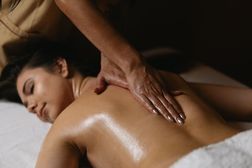
Picture two lumps of modelling clay. One straight from the fridge, one warmed a while in your hand. The cold one crumbles and cracks; the warm one shapes itself almost by itself. A muscle is surprisingly similar. Warmed tissue is more pliable, resists less and gives way even where an ordinary massage would have to work at it by force. Warmth does half the job before the hands even start.
- The muscle turns supple. Warmth increases the tissue’s elasticity, so stiff, overworked areas release sooner and without needless pressure.
- The warmth travels deeper. Basalt holds its heat for a long time and gives it off evenly, so the radiance reaches further than warmth from the hands alone.
- The body switches to calm. The warming weight of the stones dials down the alert state and sends the nervous system into rest. And a relaxed body lets its muscles go far more willingly.
That’s why a hot stone massage is, paradoxically, gentler than more vigorous kneading, yet still reaches further. It’s one of those techniques where less pressure means more effect. If you’re curious how the various approaches differ, browse our overview of the types of massage or the broader piece on what massage does for body and mind.
What a hot stone massage really gives you
We won’t promise miracles or “flushing out toxins”. That’s a myth that deserves to be put to rest. What a hot stone massage genuinely does, though, is reason enough on its own to try it:
- Faster release of stiff muscles. Warmth shortens the path to letting an overworked back and legs let go. You’ll often feel relief sooner than with an ordinary massage.
- Relief for tension in the back, neck and shoulders. Exactly where the stress of screens and phones settles, the mix of warmth and pressure does the most.
- A feeling of deep calm. The radiating weight of the stones slows your breath and your thoughts. Plenty of people drift off sooner than they’d expect.
- Warmth that lingers afterwards. Ideal for the cold months. You leave the table pleasantly warmed through, not shivering. (And if chills catch you afterwards anyway, that’s a perfectly common reaction, not cause for worry.)
- A while just for yourself. An hour of quiet, warmth and care when nobody wants anything from you. Don’t underestimate how valuable that is.
The important thing is not to read more into it than there is. Massage is a deep form of relaxation and care for the body, not a medical procedure. If something specific is troubling you, that belongs with a doctor first. Let the massage be the pleasant finishing touch, not a substitute.
What it actually feels like on the table
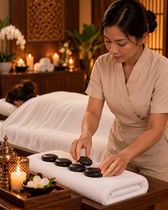
This is what people ask about most, and the answer is: pleasant, not dramatic. The therapist warms the smooth basalt stones to a temperature that heats but doesn’t burn, and always checks them before they touch your skin. Some stones are left resting on key spots, typically along the spine, while others glide over you in slow strokes. That contrast between still warmth and flowing movement is really the best part of the whole treatment.
If you feel too warm at first, or the other way around, say so. We can adjust the temperature of the stones and the room at any time, and your comfort is part of the massage, not a bother. If you’re not sure how to prepare for the visit, our guide to what to bring to a massage will help.
Who it suits best
It isn’t a massage “for everyone in every situation”, and that’s exactly why, when it fits, it fits beautifully. These people enjoy it most:
- The perpetually cold. If your hands are chilly even in May and the cold creeps into your back, the warmth of the stones is made for you.
- Desk workers. A stiff neck and shoulders after days at a screen respond gratefully to the mix of warmth and pressure. For targeted care, a neck and cervical spine massage works well too.
- Anyone who finds strong pressure unpleasant. Thanks to the warmth, the massage doesn’t need to be forceful for something to shift. Welcome news for more sensitive backs.
- Anyone hunting for a gift. A warming experience makes a wonderful present. Take a look at the Hot Stone Massage or our tips on choosing a massage as a gift.
Not sure it’s the right one for you? Our short guide to which massage is right for me will help you decide before you book.
When warmth should wait
Warmth is a powerful helper, and for that very reason it isn’t for everyone in every situation. There are times when heat doesn’t do the body any favours and it’s fair to choose a different massage. Or to wait until you’re well again:
- Pregnancy. We don’t recommend hot stones during pregnancy; a gentle pregnancy massage, after checking with your doctor, is a better fit.
- Fever and acute illness. When a temperature or a coming-on cold is knocking you down, your body needs rest and a doctor, not a massage. Warming it now would do more harm than good.
- Inflammation, swelling and vascular problems. Varicose veins, phlebitis or fresh injuries and heat simply don’t mix.
- High blood pressure and certain conditions. Here it’s worth checking with your doctor first.
The full rundown of when to skip the method and why is in our article on contraindications of hot stone massage. The rule is simple: anything medical belongs with a doctor, and if you’re unsure, get in touch with us beforehand. We’re happy to suggest a more suitable option.
Key takeaways
- Warmth does half the work. Warmed tissue is more pliable, so the muscle gives way even without strong pressure.
- Gentler, yet deeper. Basalt holds heat for a long time and carries it further than the hands alone can reach.
- Relief for the back, neck and shoulders. Exactly where the stress of screens and phones settles.
- It’s care, not treatment. Deep relaxation and warming, not a medical procedure.
- Give it time. It works best over 90 or 120 minutes.
- When to skip it. During pregnancy, with a fever, inflammation, swelling or vascular problems.
Warm up with a hot stone massage
A warming massage for deep release of the back and neck, ideal on cold days and after a demanding week. 90 or 120 minutes.
Free cancellation up to 24 h aheadpay at the salon
About the Hot Stone Massage